
BPC-157 vs. TB-500: Which Peptide Heals Injuries Faster?

You’re looking for an edge in injury recovery, a way to mend faster and stronger. The world of peptides offers promising avenues, and two names often surface at the forefront: BPC-157 and TB-500. While both are celebrated for their regenerative properties, understanding their distinct mechanisms and applications is crucial for making an informed decision. This guide aims to dissect their benefits, differences, and potential synergies, providing you with a clearer picture of which might be more suitable for your specific healing journey.
Understanding BPC-157: The Body Protection Compound
When you hear about peptides for healing, BPC-157 is usually among the first mentioned, and for good reason. This synthetic peptide, derived from a naturally occurring protein in your gastric juice, has garnered significant attention for its remarkable regenerative capabilities across a wide spectrum of tissues.
What is BPC-157?
BPC-157, or Body Protection Compound 157, is a gastric pentadecapeptide. This means it’s a short chain of 15 amino acids, originally identified in human gastric juice. Its natural role is thought to be involved in maintaining mucosal health and protecting the gastrointestinal tract. However, research has revealed its systemic healing properties extend far beyond the gut. Its stability and resistance to enzymatic degradation in the digestive system further enhance its utility, allowing for various administration routes.
In the ongoing debate of BPC-157 vs. TB-500 and their efficacy in healing injuries, it’s essential to consider various factors that contribute to recovery. For those interested in optimizing their healing processes, a related article on how to cycle SARMs safely and effectively can provide valuable insights. You can read more about it in this informative piece: How to Cycle SARMs for Beginners: Safely & Effectively. This article outlines the principles of using performance-enhancing substances, which can complement the healing properties of peptides like BPC-157 and TB-500.
How Does BPC-157 Accelerate Healing?
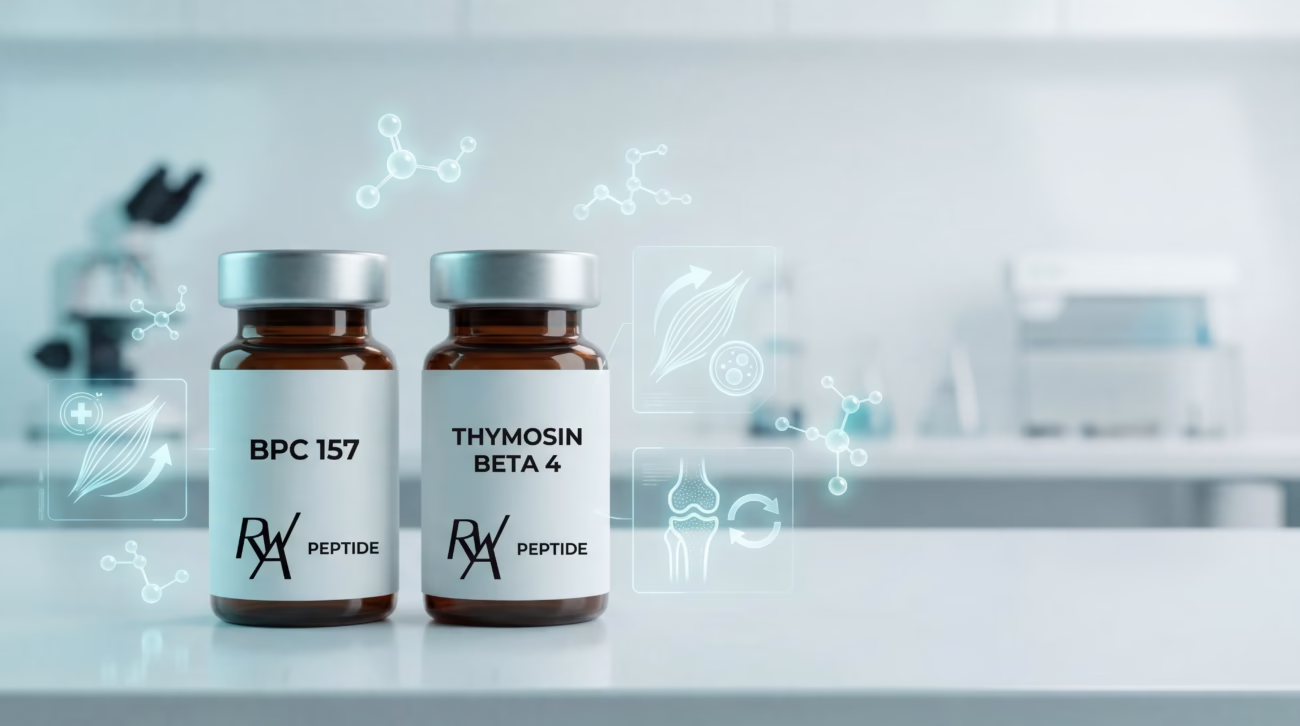
The mechanisms by which BPC-157 promotes healing are multi-faceted and complex, reflecting its broad spectrum of action. You’ll find its influence touches upon several key biological pathways:
- Angiogenesis: One of BPC-157’s most significant effects is its ability to promote the formation of new blood vessels. This process, known as angiogenesis, is critical for tissue repair, as it ensures adequate delivery of oxygen and nutrients to the injured site and efficient removal of waste products. Without robust blood supply, healing is often stalled or compromised. BPC-157 achieves this by modulating growth factors like VEGF (Vascular Endothelial Growth Factor), a primary driver of angiogenesis.
- Collagen Synthesis: Collagen is the most abundant protein in your body, forming the structural framework for connective tissues like tendons, ligaments, and skin. BPC-157 has been shown to enhance the production and organization of collagen. This isn’t just about making more collagen; it’s about forming stronger, more organized collagen fibers, leading to more resilient scar tissue and a better functional outcome.
- Growth Factor Modulation: Beyond VEGF, BPC-157 interacts with several other important growth factors. It can stimulate the activity of fibroblast growth factor (FGF), which plays a role in cell proliferation, differentiation, and tissue repair. You’ll also find it influences basic fibroblast growth factor (bFGF) and hepatocyte growth factor (HGF), both crucial for cellular regeneration and tissue remodeling.
- Anti-inflammatory Effects: While inflammation is a necessary initial step in healing, chronic or excessive inflammation can impede recovery. BPC-157 exhibits anti-inflammatory properties, helping to moderate the immune response at the injury site. This reduction in inflammation can decrease pain, swelling, and further tissue damage, creating a more conducive environment for repair.
- Cell Proliferation and Migration: BPC-157 actively encourages the proliferation and migration of various cell types involved in tissue repair, including fibroblasts, osteoblasts (bone-forming cells), and endothelial cells (lining blood vessels). By recruiting these critical cells to the injury site, it expedites the repair process.
- Neuroprotective Effects: Interestingly, BPC-157 also demonstrates neuroprotective qualities. It has shown promise in protecting neurons from damage and promoting nerve regeneration, suggesting potential applications beyond musculoskeletal injuries, such as in instances of nerve compression or trauma.
Common Applications of BPC-157
Given its diverse healing mechanisms, BPC-157 is often considered for a broad range of injuries and conditions:
- Tendon and Ligament Injuries: Think rotator cuff tears, Achilles tendonitis, or sprained ankles. BPC-157’s ability to enhance collagen synthesis and angiogenesis makes it particularly appealing for these notoriously slow-healing tissues. You’ll find many individuals turning to it for accelerating recovery after such injuries.
- Muscle Tears and Strains: Whether you’ve pulled a hamstring or strained a quad, BPC-157 can contribute to faster muscle regeneration and repair, potentially reducing downtime.
- Bone Fractures: By stimulating osteoblast activity and improving blood supply, BPC-157 may contribute to faster bone healing and stronger callus formation.
- Gastrointestinal Issues: True to its origin, BPC-157 is also used for conditions like inflammatory bowel disease (IBD), stomach ulcers, and leaky gut syndrome, owing to its gut-protective and regenerative properties.
- Nerve Damage: As mentioned, its neuroprotective and regenerative effects offer possibilities for peripheral nerve injuries.
Exploring TB-500: The Thymosin Beta-4 Analog
Now let’s shift our focus to TB-500, another potent peptide in the regenerative arsenal. While also promoting healing, its primary mechanism of action differs significantly from BPC-157, offering a complementary approach.
What is TB-500?
TB-500 is a synthetic form of Thymosin Beta-4 (Tβ4), a naturally occurring protein found in virtually all human and animal cells. Tβ4 plays a crucial role in cell differentiation, migration, tissue repair, and immune regulation. TB-500 is a fragment of this larger protein, specifically designed to harness its regenerative properties effectively. You can think of it as a concentrated version of the active healing segments of Thymosin Beta-4.
In the ongoing discussion about the efficacy of various peptides for injury recovery, a related article provides valuable insights into the broader context of peptide therapies. This article delves into the mechanisms of action and potential benefits of different peptides, including their roles in healing and recovery processes. For those interested in exploring more about the advancements in peptide research and their applications, you can read further in this informative piece found here. Understanding these nuances can help individuals make informed decisions regarding their recovery options.
How Does TB-500 Enhance Recovery?
TB-500 operates through distinct pathways, primarily focusing on cell mobility, blood vessel formation, and inflammation modulation:
- Actin Regulation: One of TB-500’s primary functions is its interaction with actin, a key component of your cell cytoskeleton. By promoting actin polymerization and depolymerization, TB-500 enhances cell migration. This accelerated cell movement is vital for healing, as it allows various reparative cells, such as fibroblasts and epithelial cells, to quickly move to the site of injury and initiate repair. Imagine a construction crew needing to get to a damaged building; TB-500 helps them get there faster.
- Angiogenesis: Similar to BPC-157, TB-500 is a powerful promoter of angiogenesis. It facilitates the formation of new blood vessels, which is critical for delivering oxygen, nutrients, and immune cells to the injured tissue, and for removing waste products. This improved blood flow is a cornerstone of effective healing.
- Inflammation Control: TB-500 exhibits significant anti-inflammatory properties. It helps to regulate the inflammatory response, preventing excessive or prolonged inflammation that can impede healing and cause further tissue damage. This modulation creates a more favorable environment for regeneration.
- Cell Differentiation: TB-500 has been shown to influence the differentiation of stem cells, potentially directing them towards specific cell lineages needed for tissue repair. This ability to guide cellular development adds another layer to its regenerative capacity.
- Apoptosis Inhibition: It can also protect cells from programmed cell death (apoptosis), which is particularly important in the acute phase of injury when cells might be under stress and prone to dying off. By preserving cell viability, it supports the overall regenerative process.
- Wound Healing: TB-500 has a documented history of accelerating wound healing, including corneal injuries and skin lesions, due to its ability to promote epithelial cell migration and collagen deposition.
Common Applications of TB-500
The broad regenerative actions of TB-500 make it suitable for a variety of injury scenarios:
- Muscle Injuries: Due to its role in cell migration and actin regulation, TB-500 is frequently used for muscle strains, tears, and general muscle recovery. It can help speed up the regeneration of muscle fibers.
- Tendon and Ligament Injuries: While BPC-157 focuses on collagen quality, TB-500’s emphasis on cell migration and angiogenesis still plays a vital role in healing these connective tissues. You might find it used for conditions like tendinitis or ligament sprains.
- Joint Pain and Inflammation: Its anti-inflammatory properties make it beneficial for reducing inflammation in joints, often associated with conditions like arthritis or overuse injuries.
- Hair Loss: Some anecdotal reports and preliminary research suggest TB-500’s involvement in cell migration and growth factors could promote hair growth, particularly in cases of androgenetic alopecia.
- Cardiac Repair: Studies have explored its potential in cardiac repair after myocardial infarction (heart attack) due to its ability to promote angiogenesis and cell survival in damaged heart tissue.
BPC-157 vs. TB-500: Key Differences and Overlapping Benefits
You’re likely noticing some similarities, particularly around angiogenesis and inflammation. However, the fundamental mechanisms by which they achieve their healing effects are distinct, leading to different strengths for specific types of injuries.
Primary Mechanisms of Action
- BPC-157: Your understanding of BPC-157 should center on its role as a “body protection compound.” It’s directly involved in promoting collagen synthesis, modulating specific growth factors (like VEGF and FGF), and stabilizing the gut lining. Its action is more about directly building and repairing tissue components and creating a direct environment for repair.
- TB-500: TB-500, on the other hand, is primarily a “cell mobility and migration engine.” It excels at regulating actin, which is critical for cells to move and spread efficiently, thereby accelerating the process of cells reaching and repairing injured sites. It’s more about orchestrating the movement of necessary repair cells and signaling pathways.
Target Tissue Focus
- BPC-157: While broad-acting, BPC-157 excels in conditions affecting connective tissues (tendons, ligaments), bones, and gastrointestinal integrity. Its direct impact on collagen production makes it a go-to for tissue strength and structural repair.
- TB-500: TB-500 demonstrates a particularly strong affinity for muscle repair, joint health, and acute wound healing where rapid cell migration is paramount. Its broad wound-healing properties make it versatile.
Practical Considerations for Use
When you’re deciding between these two, or considering using both, you’ll need to think about application methods and duration.
- Administration: Both peptides are typically administered via subcutaneous injection (under the skin) or intramuscular injection. BPC-157 can also be given orally for gastrointestinal issues, as it’s stable in stomach acid. Topically, both have been explored for localized issues, though injection is generally preferred for systemic effects.
- Dosage and Cycle Length: Dosages and cycle lengths vary significantly based on the specific injury, its severity, and individual response. Generally, peptide cycles might last for several weeks, often followed by a break. It is paramount that you consult with a healthcare professional experienced in peptide therapy to determine an appropriate regimen. Self-prescribing is not advised.
- Side Effects: Both peptides are generally well-tolerated. Reported side effects are typically mild and rare, including injection site irritation (redness, swelling), nausea, or fatigue. However, thorough research and professional guidance are always recommended.
Can BPC-157 and TB-500 Be Used Together? The Synergy Debate
You might naturally wonder, if both are so effective, could combining them offer an even greater healing advantage? The concept of synergy, where two agents work together to produce an effect greater than the sum of their individual effects, is often explored in peptide therapy.
The Rationale for Combination
- Complementary Mechanisms: The primary argument for combining BPC-157 and TB-500 lies in their complementary mechanisms of action. BPC-157, with its focus on growth factor modulation, collagen synthesis, and direct tissue repair, lays a strong structural foundation for healing. TB-500, with its emphasis on cell migration, angiogenesis, and broader wound healing, ensures that the right cells get to the right place quickly and that the tissue receives ample blood supply. You can think of BPC-157 as the architect and builder, while TB-500 is the logistics manager and rapid deployment team.
- Broad Spectrum Healing: By addressing different facets of the healing cascade simultaneously, a combination might offer a more comprehensive approach to injury recovery, particularly for complex or chronic injuries that involve multiple tissue types or prolonged healing times.
- Potentially Faster and Stronger Recovery: The theoretical benefit is an accelerated healing timeline and a more robust, functionally restored tissue due to the combined impact on various regenerative pathways. For example, BPC-157 improving the structural integrity of a tendon, while TB-500 ensures rapid cellular influx and optimized blood flow to that tendon.
Considerations for Combining Peptides
While the idea of synergistic action is enticing, you should approach combination therapy with caution and professional oversight.
- Increased Complexity: Combining peptides increases the complexity of your regimen, potentially requiring more injections and a more intricate dosing schedule.
- Monitoring and Adjustment: It also necessitates careful monitoring for any potential interactions or increased side effects, though these are typically rare with these peptides.
- Cost: Using two peptides simultaneously will invariably increase the financial cost of your treatment.
- Professional Guidance: It is imperative that you consult with a qualified healthcare professional who has experience with peptide therapy. They can help you determine if a combination is appropriate for your specific injury, manage dosages, and monitor your progress. You should not embark on such a regimen without expert advice.
Making Your Choice: Which Peptide is Right for You?
Deciding between BPC-157 and TB-500, or considering a combination, requires a nuanced understanding of your specific injury and healing goals.
When to Consider BPC-157
You will likely lean towards BPC-157 if your primary concern involves:
- Connective Tissue Injuries: Tendons, ligaments, and cartilage significant damage or chronic issues. Think torn biceps tendon, chronic patellar tendinitis, or meniscal tears. Its direct impact on collagen and growth factors is highly beneficial here.
- Bone Fractures: For accelerating bone healing and strengthening the repair.
- Gastrointestinal Health: Stomach ulcers, leaky gut, or inflammatory bowel conditions where gut mucosal integrity is compromised.
- Nerve Damage: Cases where nerve regeneration and protection are a priority.
- Structural Repair: If the injury demands a focus on rebuilding strong, resilient tissue.
When to Consider TB-500
You might find TB-500 more suitable for:
- Muscle Injuries and Recovery: Acute muscle tears, strains, or general muscle soreness from intense exercise, where rapid cell migration and regeneration are key.
- Broad Wound Healing: Superficial wounds, skin lesions, or when general acceleration of healing across various tissues is desired.
- Joint Pain and Inflammation: If active inflammation is a significant component of your discomfort or injury, TB-500’s anti-inflammatory properties can be particularly beneficial.
- Enhanced Blood Flow: When improved angiogenesis is a major requirement for your injury to heal efficiently.
- Acute Injuries: Its rapid cell mobilization might be more advantageous in the immediate aftermath of an acute injury.
When a Combination Might Be Considered
You could explore combining them under professional guidance if:
- Complex or Chronic Injuries: You have an injury involving multiple tissue types or one that has been slow to heal, where both structural repair and rapid cellular response are needed. For example, a chronic tendon injury that also presents with significant inflammation and poor vascularization.
- Maximized Healing Potential: You are seeking to maximize your body’s regenerative capacity and potentially accelerate recovery beyond what a single peptide might achieve.
- Specific, Severe Injury: A particularly debilitating injury where every possible advantage is needed for a full recovery.
Ultimately, your choice should be based on a thorough assessment of your injury, your overall health, and a comprehensive discussion with a knowledgeable healthcare provider. Peptides are powerful tools, and their effective and safe use hinges on informed decision-making and responsible application. You’re not just looking for “faster,” you’re looking for effective and lasting healing.
FAQs
1. What is BPC-157 and TB-500?
BPC-157 and TB-500 are both peptides that have been studied for their potential healing properties. BPC-157 is a synthetic peptide derived from a protein found in the stomach, while TB-500 is a synthetic version of a naturally occurring peptide found in human and animal bodies.
2. How do BPC-157 and TB-500 work?
BPC-157 is believed to promote healing by stimulating the formation of new blood vessels, increasing collagen production, and reducing inflammation. TB-500 is thought to promote healing by stimulating cell migration and proliferation, as well as reducing inflammation.
3. What are the potential benefits of BPC-157 and TB-500?
Both BPC-157 and TB-500 have been studied for their potential to accelerate the healing of various types of injuries, including muscle, tendon, ligament, and joint injuries. They may also have potential benefits for promoting recovery from exercise-induced muscle damage.
4. Are there any potential side effects of BPC-157 and TB-500?
While both peptides have shown promise in early studies, more research is needed to fully understand their safety and potential side effects. Some reported side effects of BPC-157 and TB-500 include mild irritation at the injection site and potential interactions with other medications.
5. Which peptide is more effective for healing injuries faster?
There is currently limited direct comparison between BPC-157 and TB-500 in terms of their effectiveness for healing injuries faster. Both peptides have shown potential in early studies, but more research is needed to determine which may be more effective for specific types of injuries. It is important to consult with a healthcare professional before using either peptide for injury healing.